MENOPAUSE & HORMONES · SLEEP & RECOVERY
Sleep & Recovery
“The sleep you had before perimenopause was not a luxury. It was a biological baseline your body maintained effortlessly for decades. What is happening now is not a failure — it is a hormonal system under profound transition. And it is more treatable than you have been led to believe.”
You used to sleep. You remember it — the falling asleep without effort, the staying asleep through the night, the waking feeling genuinely rested. Now you lie awake at 2 a.m., sheets damp, heart racing, mind spinning through tomorrow’s list while your body refuses to cool down. Or you fall asleep fine and wake at 3 a.m. as if an alarm went off inside you — and then spend the next two hours in that particular purgatory of exhausted-but-wired that anyone who has been through perimenopause knows too well.
Sleep disruption is the most commonly reported symptom of the menopausal transition — more prevalent than hot flashes, more pervasive than mood changes, and more comprehensively damaging in its downstream effects. Yet it is also the symptom most likely to be dismissed, undertreated, or reduced to a single cause (night sweats) when the actual picture is significantly more complex.
As a licensed psychotherapist who works extensively with women navigating menopause, I want to give you a complete, honest, evidence-based picture of why this is happening — across five distinct mechanisms, not one — and a thorough protocol for addressing it that goes beyond the usual advice to avoid caffeine and keep your bedroom cool.
61%
of postmenopausal women report significant sleep problems vs. 30% of premenopausal women
4×
increased risk of clinical insomnia during the menopausal transition
23 min
average reduction in nightly slow-wave deep sleep during perimenopause
“Menopause sleep disruption is not one problem. It is five distinct problems happening simultaneously — and each one requires a targeted response. Treating only night sweats while ignoring cortisol dysregulation, progesterone loss, and anxiety-driven hyperarousal is why so many women improve partially but never fully recover their sleep”
Why This Isn’t Just About Night Sweats
The cultural narrative about menopause and sleep focuses almost exclusively on hot flashes and night sweats as the mechanism of disruption. They are real, they are significant, and they are addressed in this article. But for the majority of women I work with, night sweats alone do not explain the full picture of their sleep disruption — and treating only vasomotor symptoms while ignoring the other four mechanisms produces incomplete results.
Here is what is actually happening:
PRIMARY MECHANISM
Progesterone Decline: The Loss of Your Natural Sleep Aid
Progesterone is often called the calming hormone, and for good reason. It has direct sedative effects on the brain through its action on GABA-A receptors — the same receptors targeted by benzodiazepine sleep medications. Progesterone metabolizes in the body to allopregnanolone, a potent neurosteroid that promotes relaxation, reduces anxiety, and facilitates sleep onset and maintenance.
Progesterone begins declining in the early perimenopausal years — often years before other hormonal changes become noticeable — which is why insomnia and increased anxiety are frequently the first symptoms women notice, well before irregular periods or hot flashes emerge. Many women describe a gradual but unmistakable shift in their relationship with sleep: falling asleep becomes harder, staying asleep becomes impossible, and the quality of sleep degrades even when the quantity appears adequate.
This is not psychological. It is the direct pharmacological consequence of losing a compound that your brain has relied on for sleep regulation since puberty. The brain does not adapt quickly or gracefully to this loss.
WHAT ADDRESSES THIS SPECIFICALLY
Bioidentical progesterone (oral micronized progesterone, specifically) has demonstrated direct sleep-promoting effects in research that synthetic progestins do not replicate. Discuss this specifically with your provider — not progestins, but micronized progesterone. Magnesium glycinate (200–400mg nightly) supports GABA function and partially compensates for reduced progesterone’s GABA effects.
PRIMARY MECHANISM
Estrogen Loss: Thermoregulation, REM, and the Architecture of Sleep
Estrogen plays multiple distinct roles in sleep regulation that are disrupted by its decline. First and most visibly: estrogen is central to the body’s thermoregulatory system. It helps the hypothalamus — the brain region that acts as the body’s thermostat — maintain stable body temperature. As estrogen declines, this thermoregulatory system becomes significantly less stable, producing the vasomotor events (hot flashes, night sweats) that interrupt sleep by rapidly raising core body temperature at precisely the moment the body needs it to be falling.
Less visibly but equally significantly: estrogen increases total REM sleep, reduces sleep latency (the time to fall asleep), and improves sleep continuity. Its loss produces measurable changes in sleep architecture — more frequent awakenings, less REM sleep, reduced total sleep time, and increased light sleep at the expense of restorative slow-wave deep sleep. These architectural changes occur even in women who don’t experience significant night sweats, which is why estrogen’s role in sleep is not reducible to vasomotor symptom management.
WHAT ADDRESSES THIS SPECIFICALLY
Bedroom temperature 65–67°F. Moisture-wicking, breathable bedding (bamboo or Tencel). A cooling mattress topper for significant night sweats. Estrogen therapy, where appropriate, is the most directly effective intervention for both thermoregulation and sleep architecture restoration.
SIGNIFICANT MECHANISM
Cortisol Dysregulation: The 2 a.m. Awakening Explained
Cortisol follows a natural circadian rhythm, rising in the early morning hours to prepare the body for waking — a process called the cortisol awakening response. During perimenopause, this rhythm becomes dysregulated in ways that directly disrupt sleep. Cortisol levels rise earlier than they should, often peaking between 2 and 4 a.m. rather than in the 6–8 a.m. range, pulling women into premature and unwanted wakefulness accompanied by racing thoughts, physical tension, and an activated nervous system.
This cortisol dysregulation is compounded by the stress of managing menopausal symptoms, by poor sleep itself (which elevates cortisol, creating a self-reinforcing cycle), and by the chronic low-grade physiological stress that hormonal fluctuation imposes on the body. The result is what many perimenopausal women describe as the worst aspect of their sleep disruption: waking fully alert in the middle of the night with no ability to return to sleep, regardless of how exhausted they are.
WHAT ADDRESSES THIS SPECIFICALLY
Morning light exposure within 30–60 minutes of waking resets the cortisol rhythm from the front end. Ashwagandha KSM-66 (600mg daily) has demonstrated cortisol reduction in multiple RCTs. Limiting alcohol entirely, as it significantly worsens the early-morning cortisol spike. Extended exhale breathing (4 counts in, 8 counts out) when awakening at 2 a.m. directly activates the vagus nerve and supports cortisol down-regulation.
OFTEN OVERLOOKED MECHANISM
Anxiety and Hyperarousal: When the Nervous System Won’t Stand Down
The relationship between menopause and anxiety is bidirectional and self-reinforcing when it comes to sleep. Hormonal fluctuations — particularly falling progesterone — directly increase nervous system arousal and anxiety. This increased arousal makes it harder to fall asleep and easier to surface from sleep and stay awake. And the experience of not sleeping produces its own secondary anxiety — anticipatory anxiety about sleep, clock-watching, performance anxiety, and catastrophizing about the consequences of another sleepless night — that becomes as disruptive as the original hormonal cause.
For many women, by the time they reach menopause, the insomnia has developed a life independent of its hormonal origins. The brain has learned that the bed is a place of wakefulness and anxiety rather than sleep. This conditioned hyperarousal is maintained by behavioral patterns — lying awake, clock-watching, spending time in bed outside of sleep — that need to be directly addressed even if the hormonal situation is managed.
WHAT ADDRESSES THIS SPECIFICALLY
Cognitive Behavioral Therapy for Insomnia (CBT-I) is the gold-standard treatment for anxiety-driven insomnia and is more effective than sleep medication long-term. Stimulus control therapy (using the bed only for sleep and sex) directly breaks the conditioned arousal response. Somatic anxiety regulation practices (breathwork, progressive muscle relaxation) reduce baseline nervous system activation.
UNDERDIAGNOSED MECHANISM
Sleep Apnea: The Menopause Connection Nobody Mentions
One of the most underrecognized contributors to menopause sleep disruption is the dramatic increase in sleep-disordered breathing that occurs during and after the menopausal transition. Estrogen and progesterone have protective effects on upper airway muscle tone and respiratory drive. As they decline, women become significantly more vulnerable to obstructive sleep apnea.
Research documents that the prevalence of sleep apnea in postmenopausal women equals that in age-matched men — a dramatic shift from premenopause. Yet it remains significantly underdiagnosed in women because it presents differently: rather than the classic snoring and gasping presentation, women with sleep apnea more commonly report insomnia, frequent awakenings, unrefreshing sleep, morning headaches, and daytime cognitive fog. These symptoms are routinely attributed to menopause rather than triggering a sleep study referral.
If you are experiencing these symptoms and sleep hygiene interventions have not produced meaningful improvement, please discuss a sleep study with your physician. Untreated sleep apnea carries serious cardiovascular, metabolic, and cognitive consequences — and treating it often produces dramatic improvement in all the other menopause symptoms it has been worsening.
WHAT ADDRESSES THIS SPECIFICALLY
A home sleep test or polysomnography for diagnosis. CPAP or oral appliance therapy for treatment. This requires medical evaluation — it is not addressable through lifestyle alone once present.
What Sleep Loss Is Actually Doing to You
Before moving to the protocol, I want to name clearly what is at stake — because treating menopause sleep disruption as a quality-of-life inconvenience rather than a medical priority is one of the most common and most costly mistakes of this transition.
Cognitive Function
Memory consolidation, executive function, and emotional regulation depend on adequate sleep. Sleep-deprived women show cognitive impairment comparable to mild alcohol intoxication — compounding the brain fog already driven by hormonal fluctuation.
Metabolism & Weight
Sleep deprivation elevates cortisol, worsens insulin sensitivity, and disrupts the hunger hormones ghrelin and leptin — directly compounding the metabolic shifts already characteristic of menopause.
Cardiovascular Health
Chronic sleep deprivation is independently associated with increased risk of hypertension, heart disease, and stroke — risks that already increase during menopause due to estrogen’s loss of cardioprotective effects.
Immune & Inflammatory
Immune repair and inflammatory regulation occur primarily during sleep. Chronic disruption increases systemic inflammation and suppresses immune function, contributing to joint pain, increased illness, and accelerated biological aging.
Mood & Relationships
Sleep deprivation amplifies emotional reactivity, reduces empathy, and impairs the capacity for regulated responses. The relational cost — more conflict, less intimacy, lower patience — is profound and often unattributed to sleep.
Bone & Muscle
Growth hormone — essential for bone density and muscle repair — releases primarily during slow-wave sleep. Chronic disruption accelerates bone and muscle loss already associated with estrogen decline.
The Complete Menopause Sleep Protocol
This protocol addresses all five mechanisms described above. Implement the environmental changes first, add behavioral practices over the following two weeks, and pursue clinical options in conversation with your healthcare provider.
1. Set Your Bedroom to 65–67°F and Upgrade Your Bedding
Temperature is the single most overlooked environmental factor in menopause sleep disruption. Deep sleep requires a fall in core body temperature of 1–2 degrees Fahrenheit. A bedroom warmer than 67°F makes this fall harder to achieve and makes vasomotor events more disruptive when they occur. Invest in moisture-wicking bedding — bamboo, Tencel, or high-thread-count cotton — and a cooling mattress topper for significant night sweats. A bedside fan directed at the body provides immediate cooling during vasomotor events and dramatically reduces their sleep-disruption impact.
2. Protect the Same Wake Time Every Single Day
A consistent wake time is the most powerful behavioral intervention available for sleep. It regulates the circadian rhythm that governs cortisol timing, melatonin production, and sleep pressure. Varying your wake time by even 60 to 90 minutes creates physiological jet lag that undermines sleep quality through the entire subsequent week. Choose your wake time and protect it with the same commitment you would give a clinical appointment — including weekends, including after bad nights. This one change, sustained for three to four weeks, produces measurable improvement in sleep onset and maintenance.
3. Build a 60-Minute Wind-Down Ritual
The nervous system cannot shift from full activation to sleep readiness instantaneously — and during menopause, when baseline cortisol and arousal are chronically elevated, the transition requires active support. Beginning 60 minutes before your target sleep time: dim all lights (blue-light blocking glasses if screens are unavoidable), eliminate screens if possible, shift to calming sensory inputs, and practice a nervous system regulation technique. Extended exhale breathing (4 counts in, 6–8 counts out) for five minutes measurably activates the parasympathetic nervous system and reduces cortisol within 90 seconds. This ritual creates conditioned relaxation that compounds over time.
4. Take Magnesium Glycinate Every Night
Magnesium is directly implicated in sleep regulation through its action on GABA receptors and NMDA receptors — the same pathways disrupted by progesterone loss. Research consistently demonstrates that magnesium supplementation improves sleep quality, reduces sleep latency, and increases sleep time, particularly in older adults and women. The most bioavailable and sleep-supportive form is magnesium glycinate, 200–400mg taken 60–90 minutes before bed. Magnesium L-threonate is the form with the strongest evidence for cognitive effects and may be beneficial for women experiencing brain fog alongside sleep disruption. Always consult your physician before adding supplements, particularly with existing medications.
5. Implement Stimulus Control Therapy
Stimulus control therapy is one of the highest-evidence components of CBT-I and directly addresses the conditioned hyperarousal that maintains insomnia beyond its original hormonal cause. The principle: use the bed only for sleep and sex. Never for waking activities — not reading, not watching television, not lying awake thinking. If you are awake in bed for more than 20 minutes, get up. Go to a dim, calm room and do something quiet and non-stimulating until you feel genuinely sleepy, then return to bed. This feels counterintuitive but progressively re-establishes the association between the bed and sleep that chronic insomnia has eroded.
6. Get Morning Light Within 30 Minutes of Waking
Exposure to bright natural light in the first 30–60 minutes after waking is one of the most evidence-based interventions for circadian rhythm regulation and cortisol timing. Morning light suppresses residual melatonin, optimizes the cortisol awakening response, and sets the circadian clock 14–16 hours forward for melatonin production in the evening — supporting earlier, more consistent sleep onset. Ten to twenty minutes outside without sunglasses is sufficient. A 10,000-lux light therapy lamp is an effective alternative in winter or for women who cannot get outside in the morning.
7. Remove Alcohol Completely for 3 Weeks
Alcohol is among the most significant and most underacknowledged contributors to menopausal sleep disruption. While it facilitates sleep onset, it dramatically fragments sleep in the second half of the night as it metabolizes, suppresses REM sleep, worsens night sweats significantly (alcohol is a vasodilator that raises core body temperature), and elevates early-morning cortisol. Even one to two drinks four to five hours before bed produces measurable sleep disruption in perimenopausal women. For women experiencing significant sleep problems, a complete three-week elimination — not reduction — provides the clearest picture of alcohol’s contribution and often produces dramatic improvement.
8. Pursue CBT-I or Discuss Hormone Therapy With Your Provider
Cognitive Behavioral Therapy for Insomnia (CBT-I) is the most evidence-based treatment for chronic insomnia available — superior to sleep medication in both short-term and long-term outcomes. Digital CBT-I programs (Sleepio, Somryst) are as effective as in-person therapy and significantly more accessible. For women whose sleep disruption is primarily hormonal in origin, hormone therapy — specifically oral micronized progesterone and, where appropriate, estrogen — addresses the root cause in ways behavioral interventions alone cannot. These are not mutually exclusive. The best outcomes typically involve both.
✦ When to Seek Medical Evaluation Without Delay
Please see your physician or a sleep medicine specialist if: your sleep disruption significantly impacts daily functioning for more than four to six weeks; you regularly feel unrefreshed despite adequate time in bed; you snore loudly or have been told you stop breathing during sleep; you wake with morning headaches; or behavioral interventions are not producing meaningful improvement after consistent implementation. Sleep is a medical issue. It warrants medical attention when it does not respond to behavioral approaches.
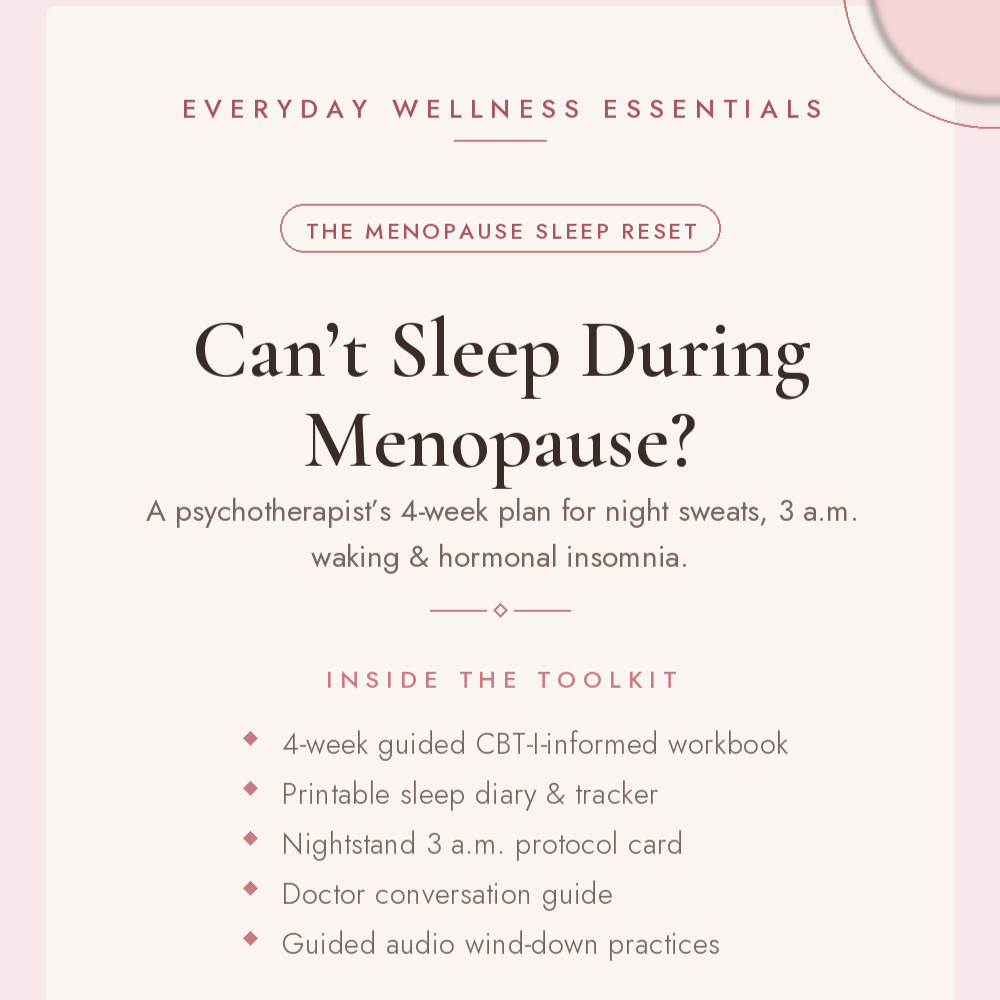
The Menopause Sleep Reset - A Psychotherapist’s four-week plan for hormonal insomnia
The sleep you had before perimenopause was not a luxury. It was a biological baseline your body maintained effortlessly for decades. What is happening now is not a failure — it is a hormonal system under profound transition. And it is more treatable than you have been led to believe.
The Menopause Sleep Reset is a structured, four-week plan built on CBT-I. The clinical method recommended as the first-line treatment for chronic insomnia, before medication — and adapted by a licensed psychotherapist for the realities of the menopausal night: Hot flashes, night sweats, the 3 a.m. cortisol surge, the anxiety and the racing mind that turns one's waking into an hour of worry.
Instant digital download - yours to keep during this season of change.
Products That Support Menopause Sleep
*May include Affiliate links
SLEEP AND TEMPERATURE SUPPORT
BOLL & BRANCH | Ultimate Cooling Bundle
Never Sleep Hot Again With Percale Sheets and lightweight cooling blanket. Crafted from long‑staple 100% organic cotton in a naturally cooling weave, these sheets tent around the body to allow air to circulate freely, helping regulate temperature and prevent heat buildup overnight. Great for better managing hot flashes and night sweats.
SLEEP AND HEALTH MONITORING SUPPORT
Oura Ring 4
Introducing Oura Ring 4: the latest evolution of the revolutionary smart ring. Oura Ring 4 brings you closer to what matters most — your health. The updated all-titanium design is powered by Smart Sensing, a new sensing platform that doesn’t just measure your biometrics, it adapts to you, providing insights into over 50 health metrics including sleep, readiness, activity, heart health, stress, metabolic health, and women’s health. Oura Ring quietly and comfortably monitors your health.
RED LIGHT THERAPY
Red Light Therapy Panel
Designed for convenient at-home sessions as part of a daily wellness routine. Many people incorporate red light sessions into routines focused on relaxation and healing of the mind and body. Red light therapy (RLT) helps manage grief and depression by stimulating mitochondrial energy production in brain cells, which enhances serotonin and dopamine production. It reduces neuroinflammation, improves sleep by regulating melatonin, and increases cellular energy to improve mood and resilience. This non-invasive approach aids in relieving emotional overwhelm and promoting a calmer mental state.
SLEEP & CALM SUPPORT
🌙 Magnesium Glycinate Supplement
Clinician-recommended for perimenopausal sleep disruption and anxiety. Magnesium glycinate is the most bioavailable and gentle form — significantly better tolerated than magnesium oxide. I recommend 200–400mg before bed.
Hatch Restore 3 Sunrise Alarm Clock, Sound Machine, Smart Light Sleep Routine
𝖱𝖾𝗌𝗍𝗈𝗋𝖾 𝟥 𝗂𝗌 𝖽𝖾𝗌𝗂𝗀𝗇𝖾𝖽 𝗍𝗈 𝗁𝖾𝗅𝗉 𝗒𝗈𝗎 𝖻𝗎𝗂𝗅𝖽 𝖺 𝖻𝖾𝖽𝗍𝗂𝗆𝖾 𝗋𝗈𝗎𝗍𝗂𝗇𝖾 𝗍𝗁𝖺𝗍 𝗊𝗎𝗂𝖾𝗍𝗌 𝗒𝗈𝗎𝗋 𝗆𝗂𝗇𝖽 𝗌𝗈 𝗒𝗈𝗎 𝖼𝖺𝗇 𝗌𝗅𝖾𝖾𝗉 𝖻𝖾𝗍𝗍𝖾𝗋. 𝖨𝗍𝗌 𝗋𝖾𝗌𝗍𝖿𝗎𝗅 𝖽𝖾𝗌𝗂𝗀𝗇 𝖺𝗇𝖽 𝗈𝗋𝗂𝗀𝗂𝗇𝖺𝗅 𝗌𝗅𝖾𝖾𝗉 𝖼𝗈𝗇𝗍𝖾𝗇𝗍 𝗌𝗎𝗉𝗉𝗈𝗋𝗍 𝖺 𝗌𝖼𝗋𝖾𝖾𝗇-𝖿𝗋𝖾𝖾 𝖻𝖾𝖽𝗋𝗈𝗈𝗆 𝖺𝗍 𝗇𝗂𝗀𝗁𝗍. 𝖯𝗋𝖾𝗉𝖺𝗋𝖾 𝗒𝗈𝗎𝗋 𝗆𝗂𝗇𝖽 𝖿𝗈𝗋 𝗌𝗅𝖾𝖾𝗉 𝖺𝗇𝖽 𝖼𝗋𝖾𝖺𝗍𝖾 𝖺𝗇 𝗈𝗉𝗍𝗂𝗆𝖺𝗅 𝗌𝗅𝖾𝖾𝗉 𝖾𝗇𝗏𝗂𝗋𝗈𝗇𝗆𝖾𝗇𝗍 𝗐𝗂𝗍𝗁 𝖼𝗎𝗌𝗍𝗈𝗆𝗂𝗓𝖺𝖻𝗅𝖾 𝗅𝗂𝗀𝗁𝗍 𝖺𝗇𝖽 𝖺𝗎𝖽𝗂𝗈 𝗉𝖺𝗂𝗋𝗂𝗇𝗀𝗌. Harsh evening light tells your brain it's still daytime. A warm, dimming light at night — and a gentle wake light in the morning- works with your circadian rhythm instead of against it. H𝖾𝗅𝗉𝗌 𝗒𝗈𝗎 𝗐𝖺𝗄𝖾 𝗎𝗉 𝗋𝖾𝖿𝗋𝖾𝗌𝗁𝖾𝖽 𝗂𝗇 𝗍𝗁𝖾 𝗆𝗈𝗋𝗇𝗂𝗇𝗀.
Ashwagandha KSM-66 — 600mg
KSM-66 is the most clinically studied form of ashwagandha, with multiple randomized controlled trials demonstrating statistically significant reductions in cortisol, perceived stress, and anxiety. I recommend Thorne, Double Wood or Jarrow specifically for their third-party testing standards. As with all supplements, discuss with your physician before use, particularly if you have thyroid conditions or are taking medications. Ashwagandha is one of the few adaptogens with genuinely robust evidence behind it.
AROMATHERAPY
VITRUVI | Stone Diffuser Sleep Bundle
The Vitruvi Air Waterless Diffuser fills your space with clean, natural aromas - no water or heat required.A calming and soothing scent that gently lulls you into a peaceful slumber with the relaxing aroma of Lavender, gentle Chamomile, and the grounding presence of Frankincense. Lavender has the strongest evidence base of any aromatherapy intervention for sleep — demonstrated in multiple randomized controlled trials to reduce sleep latency, increase slow-wave sleep, and improve subjective sleep quality. Diffused 30 minutes before bed as part of a wind-down ritual, it provides both a conditioned relaxation cue and direct anxiolytic effects through the olfactory-limbic pathway.
MEMORY AID
Skylight Calendar 2
When the menopausal brain fog makes it challenging to retain information, this digital calendar helps to move the load off your overworked memory and onto a reliable system. This ultimate digital calendar keeps the whole household on track with shared Calendars, Tasks, Lists, chores, meal plans and on-the-go access. For busy families and midlife moms who need to capture everything immediately and store in one trusted place.
BLUE LIGHT PROTECTION
Felix Gray Blue Light Blocking Glasses
For the hours when screen use is genuinely necessary, blue light blocking glasses meaningfully reduce eye strain, headaches, and melatonin suppression. Felix Gray uses clinically validated lenses without the yellow tint that makes most blue light glasses unwearable during the day. A practical harm-reduction tool for the screens you cannot eliminate.
Your Sleep Is Worth Fighting For
I want to close with something direct: the sleep you are losing is not a minor inconvenience to be tolerated until menopause passes. It is the biological foundation of your cognitive function, your cardiovascular health, your metabolic stability, your emotional regulation, and your immune resilience. Every system in your body that is already under stress during this transition depends on sleep to repair and restore itself. Losing it compounds every other menopausal challenge you are navigating.
It is also improvable. Significantly and measurably improvable, with the right combination of environmental, behavioral, supplemental, and — where appropriate — clinical interventions. You do not need to choose between waiting it out and taking sleeping pills. There is an evidence-based middle path that addresses the actual causes rather than masking the symptoms, and it is available to you.
Please give your sleep the same attention and advocacy you would give any other aspect of your health that was this significantly impaired. You deserve to sleep again.
With care for your rest,
-Michelle

MICHELLE DUTCHER, MA, LPC, PLLC
PSYCHOTHERAPIST - PRIVATE PRACTICE - 20+ YEARS
I work with women navigating the full complexity of menopause — hormonal, psychological, relational, and behavioral. Sleep is among the most foundational and most neglected dimensions of this transition, and it receives the full clinical attention it deserves in my practice and on this blog.
The content provided on Everyday Wellness Essentials is for educational and informational purposes only and is not intended as medical, psychological, or professional advice. While I am a licensed mental health professional, the information shared on this website is not a substitute for individualized clinical care, diagnosis, or treatment. If you are experiencing significant emotional distress, mental health concerns, or a medical condition, you are encouraged to seek support from a qualified healthcare provider in your area.
*Some of the links on this website may be affiliate links. This means that I may earn a small commission — at no additional cost to you — if you choose to make a purchase through these links. I only recommend products or resources that I genuinely believe may be helpful, but you are encouraged to do your own research before making any purchasing decisions.
Sleep Disruption Driving
Anxiety and Overwhelm?
Download the free 5-Step Anxiety Reset Workbook — includes the extended exhale breathing technique that directly activates the parasympathetic nervous system and supports sleep onset. Evidence-based, printable, and free.