“Understanding what your hormones are actually doing — and why — is one of the most empowering things a woman can do for herself at midlife. Knowledge is not just power here. It is relief.”
If you have ever Googled “am I in perimenopause” at 3 a.m. after lying awake for two hours with a racing heart and a mind that won’t quiet, you are in good company. The hormonal transition that precedes menopause is one of the most significant biological events of a woman’s life — and yet most of us receive almost no preparation for it.
We are told about hot flashes. We are not told about the brain fog that makes us question our competence, the sleep disruption that makes everything harder, the joint aches, the anxiety that arrives from nowhere, or the subtle but profound sense that our bodies have become unfamiliar territory.
As a licensed psychotherapist who specializes in women’s health and midlife transitions, I have sat with hundreds of women navigating this passage. What they need most, I have found, is not platitudes — it is clear, accurate, compassionate information. That is what this guide is designed to provide.
1.3M
Women reach menopause every year in the United States alone
7–14
Years the full menopausal transition typically spans
34+
Recognized symptoms associated with the menopausal transition
The Three Stages: What Is Actually Happening
The word “menopause” is often used loosely to describe a years-long hormonal transition, but it actually refers to one specific moment: the point at which a woman has gone 12 consecutive months without a menstrual period. Everything before that moment is perimenopause. Everything after is postmenopause. Understanding these distinctions matters enormously for how you interpret your symptoms and seek support.
STAGE ONE 🌸
Perimenopause
Typically begins in the mid-to-late 40s — sometimes earlier — and lasts 4–10 years
Perimenopause is the transition period leading up to menopause, and it is where most of the turbulence occurs. During this phase, the ovaries begin producing estrogen and progesterone in increasingly erratic and declining amounts. It is not a smooth, gradual decline — it is a fluctuation, with estrogen levels sometimes spiking higher than normal before dropping, which can make symptoms unpredictable and confusing.
Progesterone tends to decline first and most sharply, which is why many of the earliest symptoms of perimenopause — sleep disruption, anxiety, mood changes — are often progesterone-related. Estrogen’s decline becomes more pronounced in the later years of perimenopause, bringing the more classic vasomotor symptoms like hot flashes and night sweats.
Many women in early perimenopause are still having regular periods and would never think to attribute their symptoms to hormonal changes. This is one of the most important gaps in women’s health literacy: perimenopause can begin a full decade before periods stop, and its symptoms can be wide-ranging and easily misattributed to stress, depression, thyroid issues, or simply “getting older.”
🌡️Hot flashes & night sweats 😴Sleep disruption
😰New or worsening anxiety 🌊Irregular periods
🧠Brain fog & memory lapses 😤Irritability & mood swings
🦴Joint aches & muscle tension 💧Vaginal dryness
💓Heart palpitations
⚖️Weight changes, especially around the abdomen
STAGE TWO 🌸
Menopause
Defined as 12 consecutive months without a menstrual period — average age 51 in the US
Menopause itself is a single moment in time — though you can only identify it in retrospect, once you have reached that 12-month mark. It is not a phase you live in; it is a threshold you cross. What precedes it is perimenopause. What follows is postmenopause.
Natural menopause occurs when the ovaries have exhausted their supply of egg follicles and permanently reduce estrogen and progesterone production to very low levels. Surgical menopause occurs when both ovaries are removed (oophorectomy), resulting in an immediate, abrupt hormonal shift that is often more intense than the gradual natural transition.
Early menopause (before age 45) and premature ovarian insufficiency (before age 40) are less common but important to recognize. Women who experience early menopause face longer-term health considerations, particularly around bone density and cardiovascular health, that make early intervention and monitoring especially important.
📅No period for 12+ months 🌡️Persistent vasomotor symptoms
🦴Accelerated bone density loss ❤️Cardiovascular risk changes
💧Urogenital changes (GSM) 🧠Cognitive changes
STAGE THREE ☀️
Postmenopause
Begins after the 12-month threshold and continues for the rest of a woman’s life
Postmenopause is the longest stage — and for many women, ultimately the most stable and in some ways the most liberating. Once the hormonal fluctuations of perimenopause have settled into a new, lower baseline, many of the most disruptive symptoms (particularly the mood instability and irregular bleeding) resolve or significantly improve.
The postmenopausal years bring their own health considerations, particularly around bone health, cardiovascular health, and genitourinary health. Estrogen played an important protective role in all of these systems, and its sustained absence requires intentional attention to diet, exercise, and sometimes medical intervention.
What the research and clinical experience also show, however, is that postmenopausal women report significantly higher levels of psychological wellbeing, self-acceptance, and clarity of purpose than women in the perimenopausal years. The storm, for most women, does eventually quiet — and what emerges on the other side is often a woman who knows herself with a depth and confidence she has never quite had before.
✅Hormonal stability returns 😌Mood often improves significantly
🦴Ongoing bone density monitoring ❤️Cardiovascular health focus
💪Strength training becomes critical 🌟Increased psychological clarity
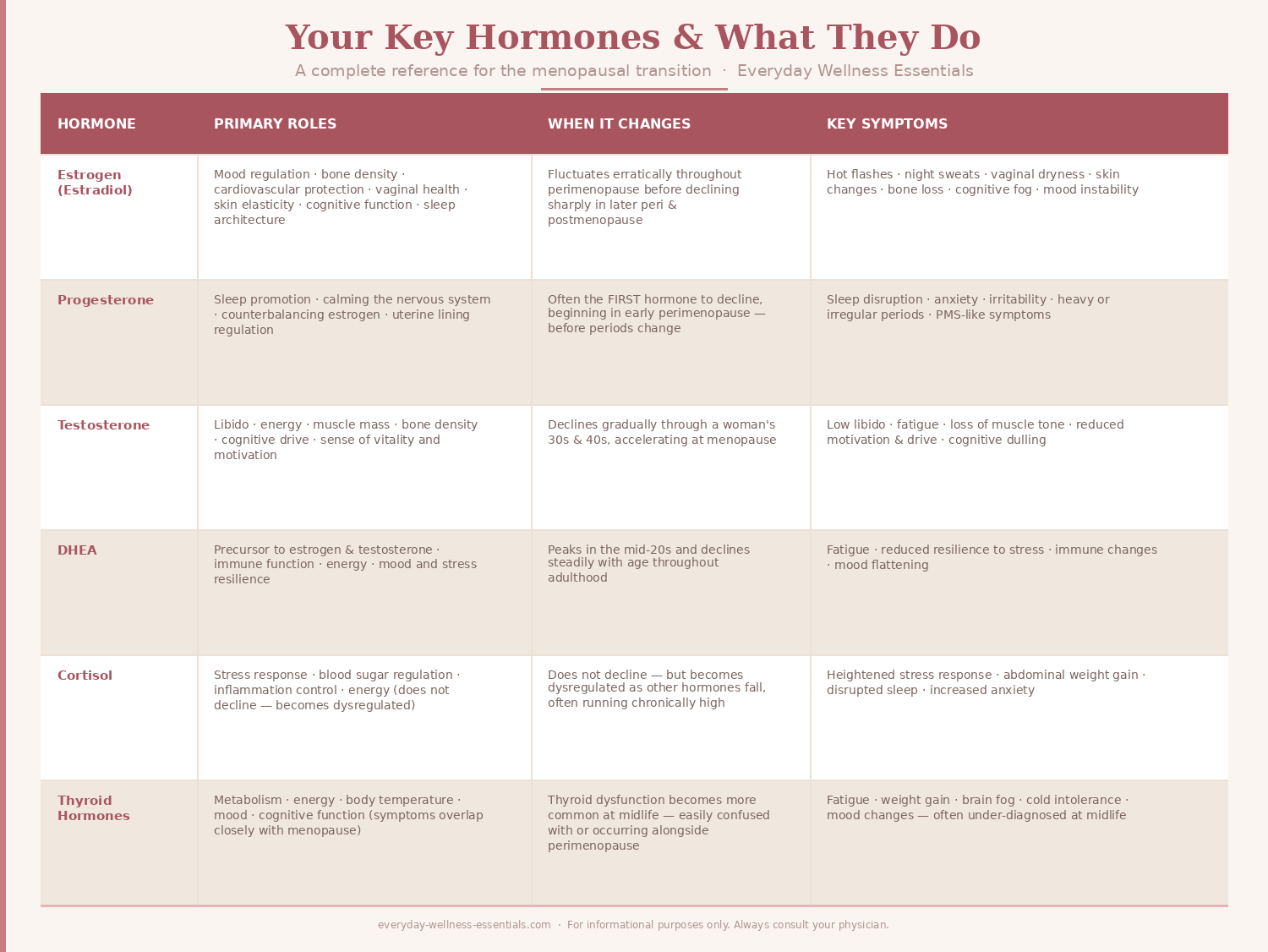
Your Key Hormones and What They Do
Understanding the specific roles your hormones play helps make sense of why their decline produces such a wide range of symptoms. These are not simply “reproductive hormones” — they are fundamental regulators of your entire physiology.
✦ Always rule out thyroid dysfunction
Because thyroid symptoms overlap so substantially with perimenopausal symptoms, any woman experiencing significant fatigue, brain fog, weight changes, or mood disruption should have her thyroid function tested — specifically TSH, Free T3, Free T4, and thyroid antibodies. Many women are treated for menopause when thyroid disease is the primary or contributing driver.
The Hormone Replacement Therapy Conversation
What the Current Evidence Actually Says
HRT has been one of the most misunderstood and fear-laden topics in women’s health for the past two decades, largely due to the misinterpretation of a 2002 Women’s Health Initiative study that is now widely acknowledged by menopause specialists to have been flawed in its conclusions and catastrophically misapplied.
The current scientific consensus, as reflected by the Menopause Society (formerly NAMS), the British Menopause Society, and most major endocrinology organizations, is that for healthy women under 60 who are within 10 years of menopause onset, the benefits of HRT generally outweigh the risks — and that HRT is the most effective treatment available for vasomotor symptoms and for preserving bone and cardiovascular health in the early postmenopausal years.
✦ POTENTIAL BENEFITS
Relief from vasomotor symptoms · Improved sleep · Mood stabilization · Bone density preservation · Cardiovascular protection (when started early) · Reduced risk of type 2 diabetes · Genitourinary symptom relief · Cognitive protection
✦ IMPORTANT CONSIDERATIONS
Not appropriate for everyone (history of certain cancers, clotting disorders, unexplained vaginal bleeding) · Different formulations carry different risk profiles · Bioidentical vs. synthetic hormones · Timing matters significantly · Individual health history is paramount
✦ TYPES OF HRT
Estrogen-only (for women without a uterus) · Combined estrogen + progesterone · Testosterone addition · Transdermal (patch, gel, spray) vs. oral · Vaginal estrogen (local, minimal systemic absorption) · Bioidentical compounded hormones
✦ THE MOST IMPORTANT STEP
Find a physician who specializes in menopause medicine — not all doctors have current training in this area. The Menopause Society maintains a directory of certified menopause practitioners at menopause.org/find-a-provider
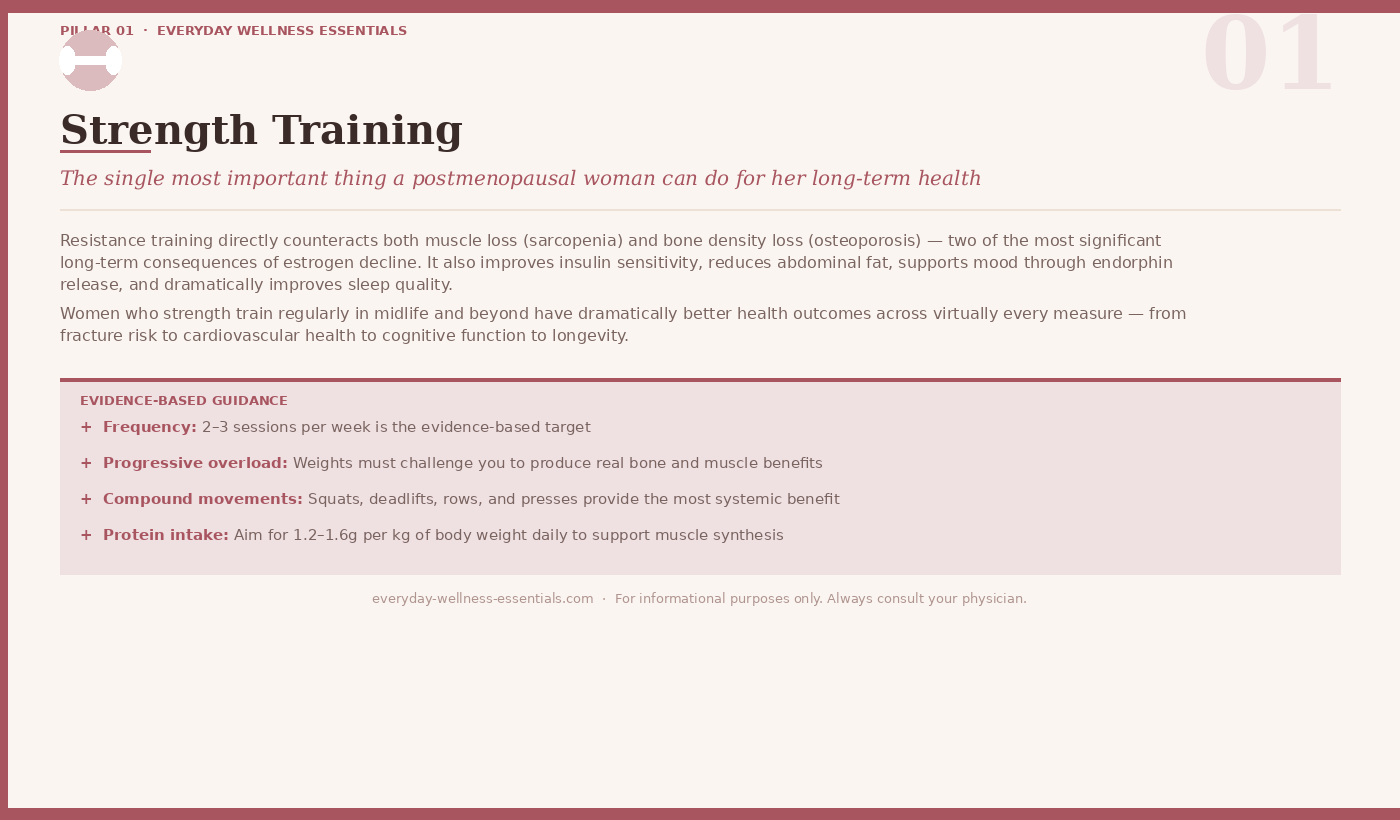
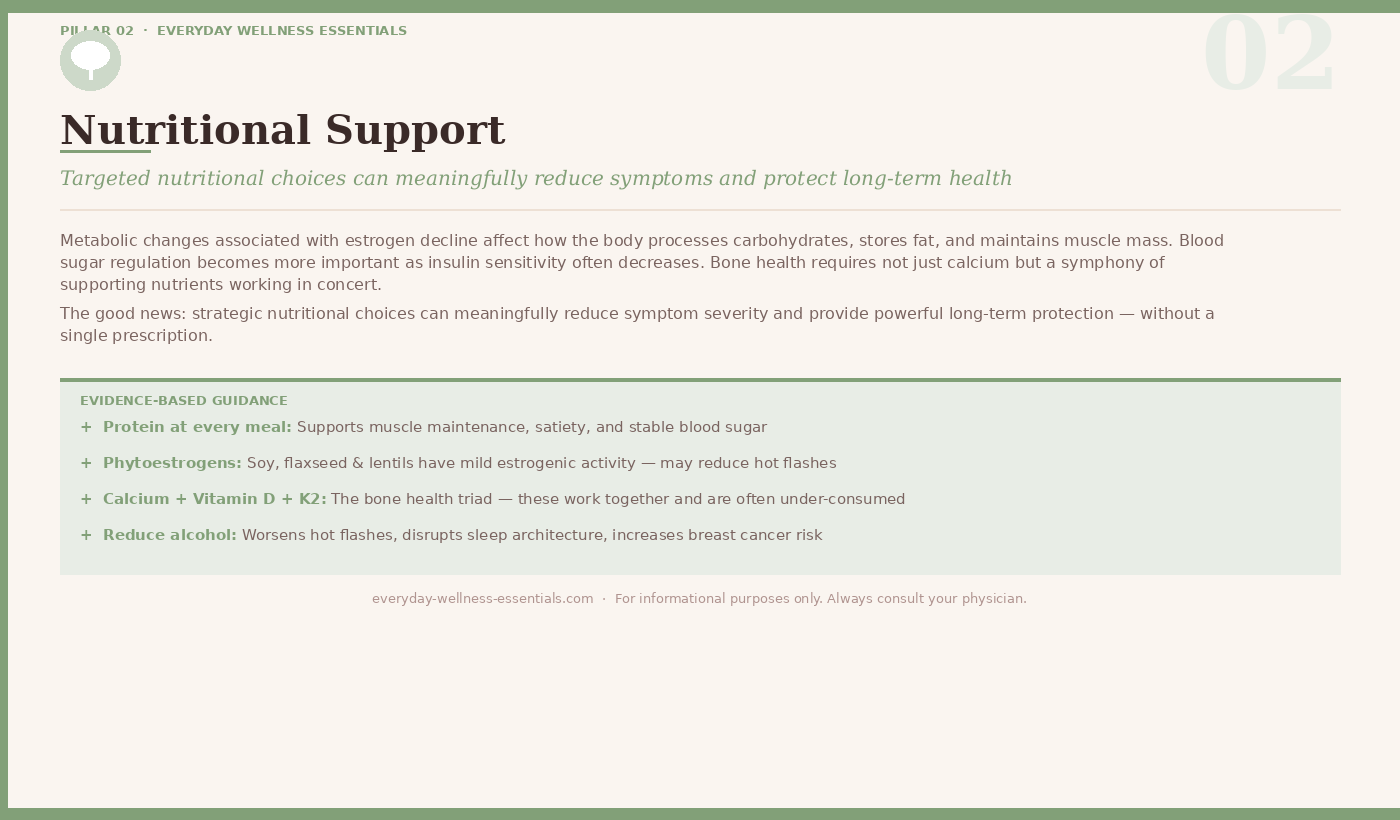
Five Pillars of Hormonal Wellness Without a Prescription
Whether you choose HRT or not, these five evidence-based lifestyle pillars have a profound impact on how you experience the menopausal transition. They are not soft suggestions — they are among the most powerful interventions available to you, with decades of research behind them.
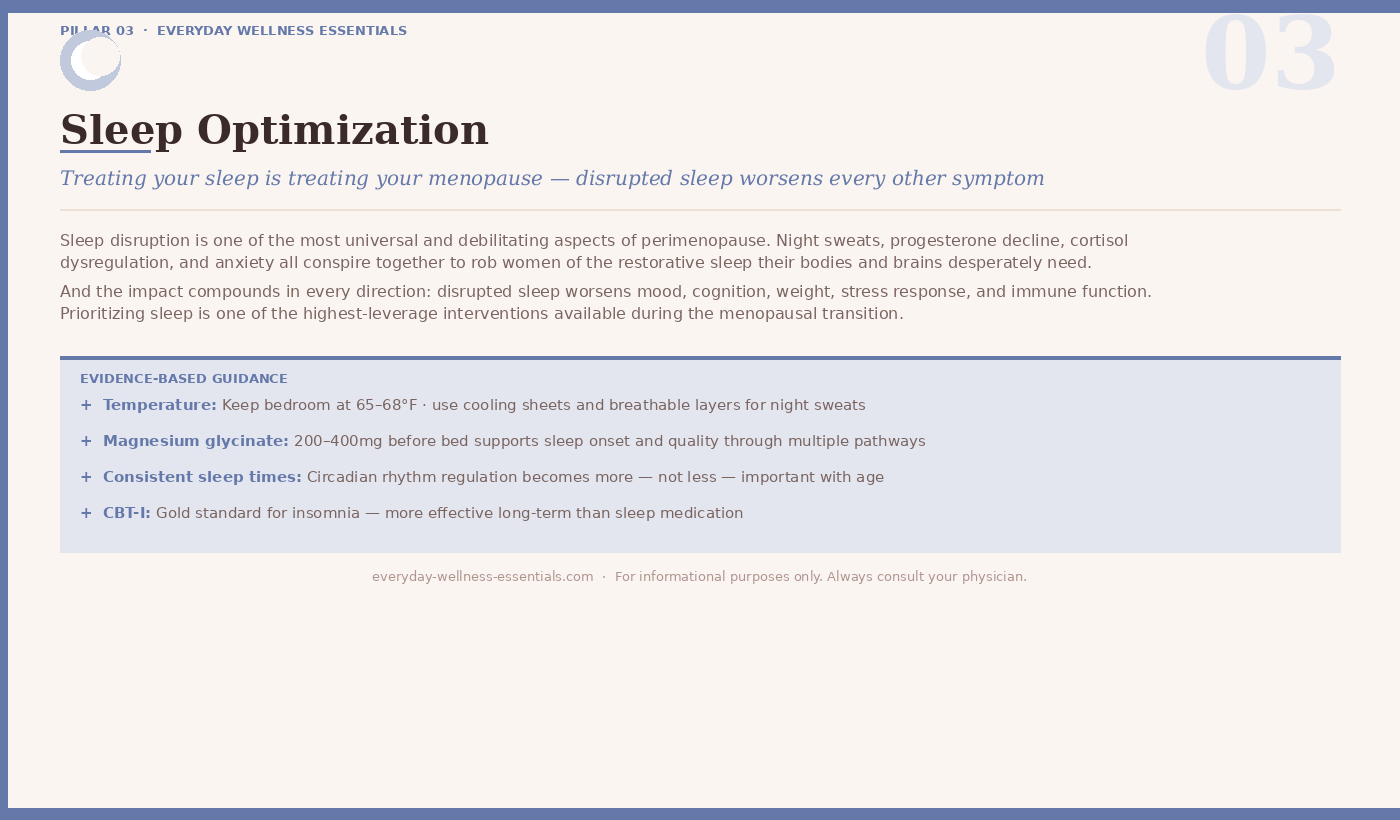
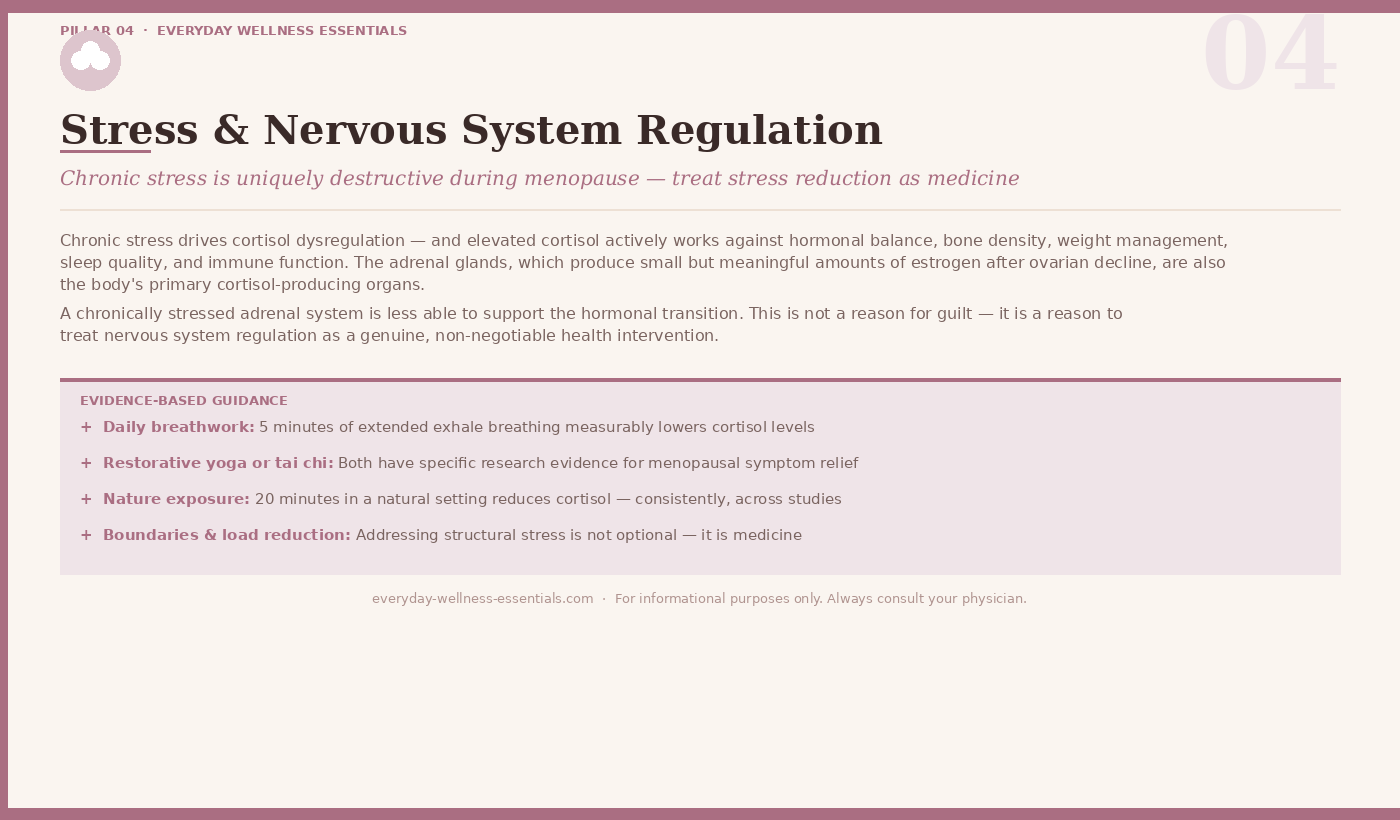
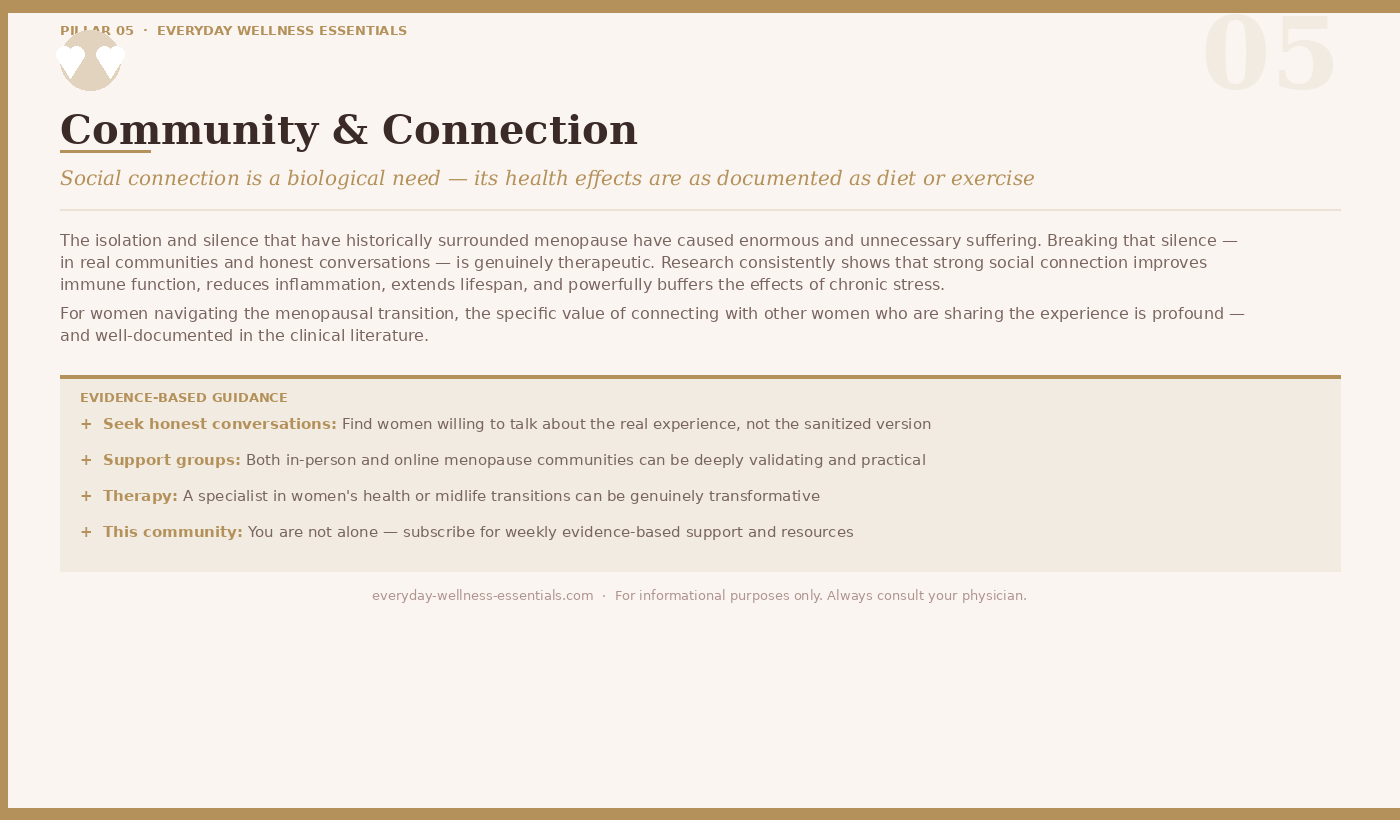
“Menopause is not something that happens to you. It is something your body is doing — with intelligence, with purpose, and with more complexity than any of us were ever taught to appreciate.”
Products That Support Your Hormonal Transition
These are carefully chosen, evidence-informed products I recommend for supporting hormonal health through the menopausal transition. All affiliate links are clearly disclosed.
🦴 BONE & HORMONAL HEALTH
Vitamin D3 + K2 Complex
The bone health duo that most women are deficient in. Vitamin D3 supports calcium absorption and immune function; K2 directs calcium into bones rather than arteries. Critical during and after the menopausal transition when bone loss accelerates. I recommend having your Vitamin D levels tested and supplementing to reach 50–70 ng/mL.
For educational purposes only. Not medical advice. Always consult your physician before starting any supplement or wellness protocol.
*Affiliate link — I earn a small commission at no cost to you.
🌙 SLEEP & NERVOUS SYSTEM
Magnesium Glycinate — High Absorption Formula
Magnesium is involved in over 300 enzymatic reactions in the body and is critically important for sleep, stress response, muscle function, and bone health — all of which are affected by the menopausal transition. Glycinate is the most bioavailable and best-tolerated form. 200–400mg before bed is my standard recommendation.
For educational purposes only. Not medical advice. Always consult your physician before starting any supplement or wellness protocol.
*Affiliate link — I earn a small commission at no cost to you.
MEMORY AID
Skylight Calendar 2
This ultimate digital calendar keeps the whole household on track with shared Calendars, Tasks, Lists, chores, meal plans and on-the-go access. For busy families and midlife moms who need to capture everything immediately and store in one trusted place. When the menopausal brain fog makes it challenging to retain information, this digital calendar helps to move the load off your overworked memory and onto a reliable system.
SLEEP AND TEMPERATURE SUPPORT
BOLL & BRANCH | Ultimate Cooling Bundle
Never Sleep Hot Again With Percale Sheets and lightweight cooling blanket. Crafted from long‑staple 100% organic cotton in a naturally cooling weave, these sheets tent around the body to allow air to circulate freely, helping regulate temperature and prevent heat buildup overnight. Great for better managing hot flashes and night sweats.
🌡️ VASOMOTOR SYMPTOM SUPPORT
GYS Viscose from Bamboo Women’s Cooling Pajamas
Night sweats are one of the most sleep-disruptive symptoms of perimenopause. Moisture-wicking, breathable organic bamboo pajamas designed specifically for women experiencing night sweats can make a meaningful difference in sleep quality. A small investment that pays dividends in rest.
For educational purposes only. Not medical advice. Always consult your physician before starting any supplement or wellness protocol.
*Affiliate link — I earn a small commission at no cost to you.
💪 STRENGTH TRAINING AT HOME
Adjustable Dumbbell Set — Space-Saving Design
Resistance training is the most evidence-backed intervention for postmenopausal bone and muscle health. A quality adjustable dumbbell set removes every barrier to getting started — no gym required, small footprint, wide weight range to grow with you as you progress.
For educational purposes only. Not medical advice. Always consult your physician before starting any supplement or wellness protocol.
*Affiliate link — I earn a small commission at no cost to you.
📚ESSENTIAL READING
Estrogen Matters by Dr. Avrum Bluming & Dr. Carol Tavris
The definitive, meticulously researched corrective to two decades of HRT misinformation. Written by an oncologist and a social psychologist, this book makes the case for HRT’s safety and efficacy with clarity, rigor, and compassion. Required reading for any woman trying to make an informed decision about her hormonal health.
For educational purposes only. Not medical advice. Always consult your physician before starting any supplement or wellness protocol.
*Affiliate link — I earn a small commission at no cost to you.
🫖HERBAL SUPPORT
Black Cohosh Supplement Blend
Black cohosh has the most research support of any herbal supplement for hot flash reduction, with multiple clinical trials showing meaningful symptom relief. Black cohosh helps reduce night sweats, while chaste tree extract provides herbal hormonal balance and helps with monthly mood and bloating. Together they address two of the most common perimenopausal challenges. Always discuss with your physician before starting herbal supplements.
For educational purposes only. Not medical advice. Always consult your physician before starting any supplement or wellness protocol.
*Affiliate link — I earn a small commission at no cost to you.
📓TRACKING & AWARENESS
The Perimenopause Symptom Tracker Journal
Tracking your symptoms over time — their timing, intensity, patterns, and relationship to your cycle — is one of the most valuable things you can do for your hormonal health care. This guided journal makes that process beautiful and manageable, and gives you meaningful data to bring to your physician appointments.
For educational purposes only. Not medical advice. Always consult your physician before starting any supplement or wellness protocol.
*Affiliate link — I earn a small commission at no cost to you.
Managing Anxiety Alongside
Your Hormonal Transition?
Download the free 5-Step Anxiety Reset Workbook — a practical, evidence-based guide to calming your nervous system in real time. Designed for women navigating exactly this kind of complexity.
Finding the Right Support
One of the most important things I want to leave you with is this: the quality of care available to women navigating the menopausal transition varies enormously from provider to provider. Many primary care physicians have limited and outdated training in menopause medicine. A gynecologist who completed training in the early 2000s may still be operating from the post-2002 fear of HRT that has since been substantially revised.
You deserve a provider who is current, who takes your symptoms seriously, who treats the whole woman and not just the checklist, and who is willing to have an individualized conversation about your options. If you are not getting that, it is entirely appropriate — and I would argue necessary — to seek someone who specializes in menopause medicine. The Menopause Society’s provider directory (menopause.org) is an excellent place to start.
And in the meantime — you have found your way here. You are asking the right questions. You are doing the work of understanding what is happening in your own body. That matters more than you might realize.
With care and deep respect,
Michelle

Michelle M. Dutcher, MA, LPC, PLLC
LICENSED PSYCHOTHERAPIST · PRIVATE PRACTICE · 20+ YEARS
I help women navigate stress, anxiety, hormonal transitions, and life's biggest changes — with evidence-based tools and zero judgment. This blog is where clinical expertise meets real life.
The content provided on Everyday Wellness Essentials is for educational and informational purposes only and is not intended as medical, psychological, or professional advice. While I am a licensed mental health professional, the information shared on this website is not a substitute for individualized clinical care, diagnosis, or treatment. If you are experiencing significant emotional distress, mental health concerns, or a medical condition, you are encouraged to seek support from a qualified healthcare provider in your area.
Some of the links on this website may be affiliate links. This means that I may earn a small commission — at no additional cost to you — if you choose to make a purchase through these links. I only recommend products or resources that I genuinely believe may be helpful, but you are encouraged to do your own research before making any purchasing decisions.