
“The paperwork ends. The legal process concludes. And then comes the part nobody prepared you for — the quiet, disorienting work of figuring out who you are now.”
There is a strange cultural script around divorce. It tells us that the hard part is the conflict, the legal process, the separation of households and assets and children’s schedules. And those things are genuinely hard. But for many women, the hardest part arrives afterward — when the noise settles and the paperwork is filed and the world expects you to start “moving on.”
What no one adequately prepares you for is the identity crisis that comes next.
You look in the mirror and recognize your face but feel strangely unfamiliar inside it. You reach for ways of describing yourself and find that many of them — wife, partner, half of a couple — no longer apply. You are not sure what you want, what you like, who your people are, what your life is supposed to look like now. You may feel both liberated and utterly lost, sometimes within the same hour.
As a licensed psychotherapist who has worked with women navigating divorce for over 20 years, I want to tell you something clearly and directly: this experience is not pathological. It is not a sign that you made the wrong decision, that you are not resilient enough, or that you are somehow failing at your own life. It is the entirely predictable consequence of a profound identity disruption — and it deserves far more clinical and cultural attention than it typically receives.
This post is an honest guide to what actually happens to your sense of self after divorce — the things most people don’t talk about — and a practical, evidence-based framework for rebuilding an identity that is more fully and authentically your own.
“Divorce does not just end a marriage. It dismantles the self that existed inside that marriage — and rebuilding requires far more than just moving on. It requires moving inward.”
Why Divorce Is an Identity Crisis
We tend to think of identity as something fixed and internal — a core self that exists independently of our circumstances. But psychological research on identity tells a more complex story. Our sense of who we are is deeply relational and contextual. It is shaped by our roles, our relationships, our social environments, and the narratives we tell about ourselves and our lives.
Marriage, particularly a long marriage, is one of the most identity-shaping structures a person can exist within. Over time, your identity becomes genuinely intertwined with your partner’s — not just in practical terms, but neurologically and psychologically. Your routines, your social world, your shared language, your future plans, your very sense of what a normal Tuesday feels like — all of this has been co-created within the marriage. When the marriage ends, all of it requires reconstruction.
Psychologist Kenneth Gergen’s work on the relational self helps explain why this feels so destabilizing: we are not singular selves but relational ones. We exist, in part, through our connections and contexts. Remove a central one, and a portion of the self must be rebuilt from the ground up. This is not weakness. This is how human identity actually works.
✦ The Research on Divorce and Identity
Studies on post-divorce adjustment consistently show that the quality of identity reconstruction — not the circumstances of the divorce itself — is the strongest predictor of long-term wellbeing. Women who actively engage with the question of who they are becoming, rather than simply trying to return to who they were before, show significantly better outcomes across every measure including emotional health, relationship quality, and life satisfaction.
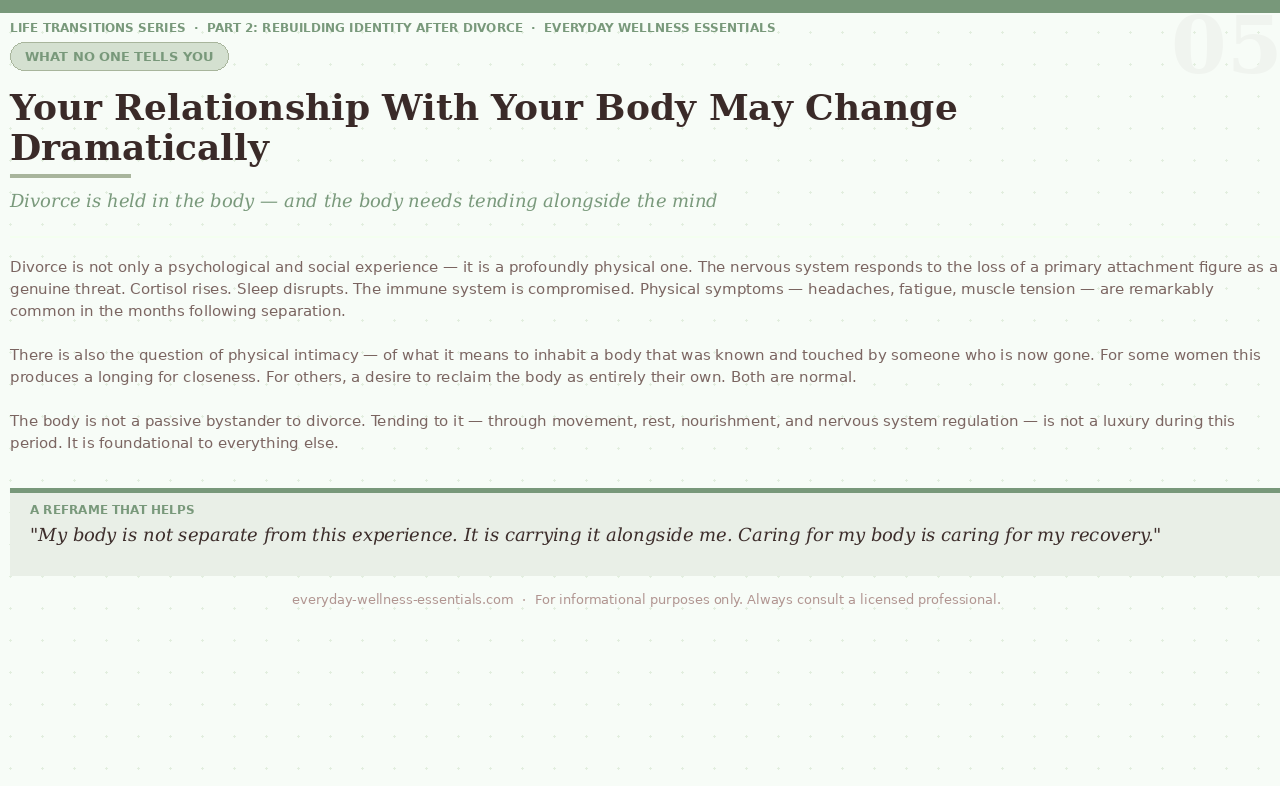
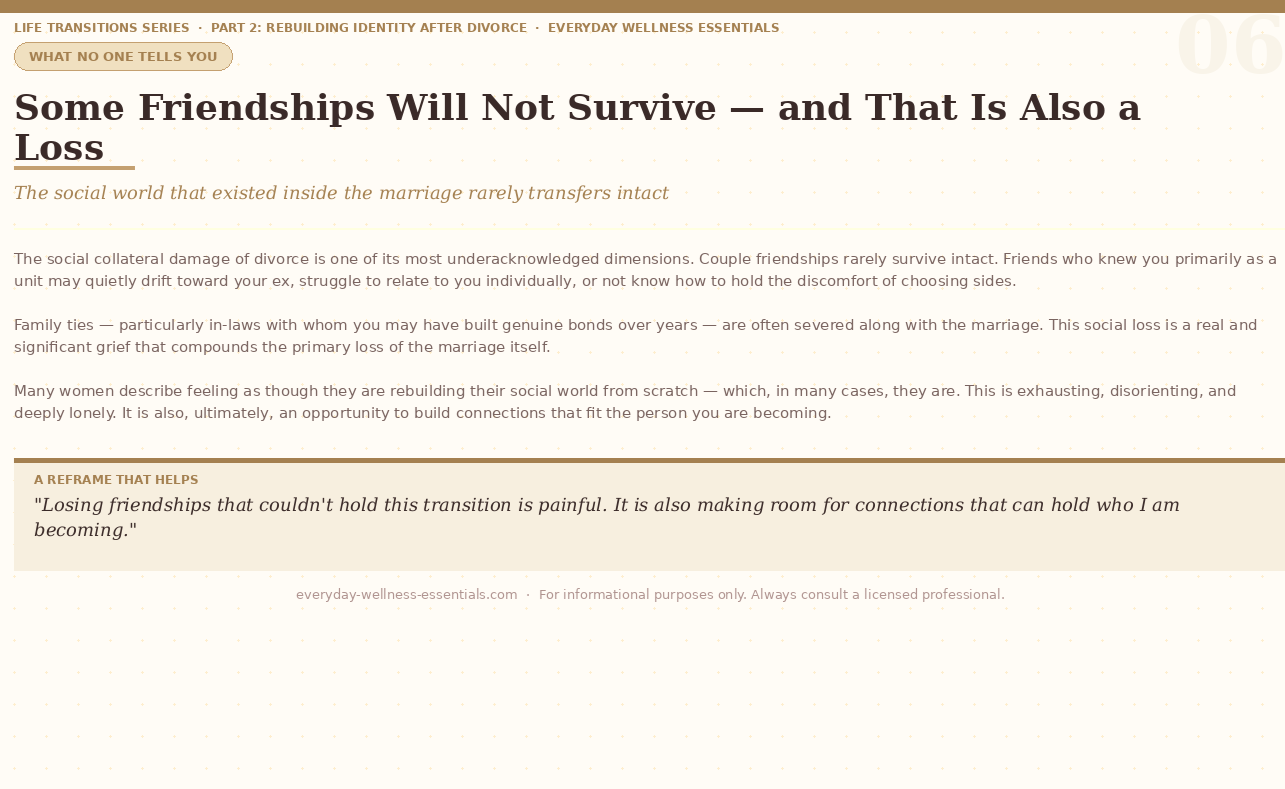
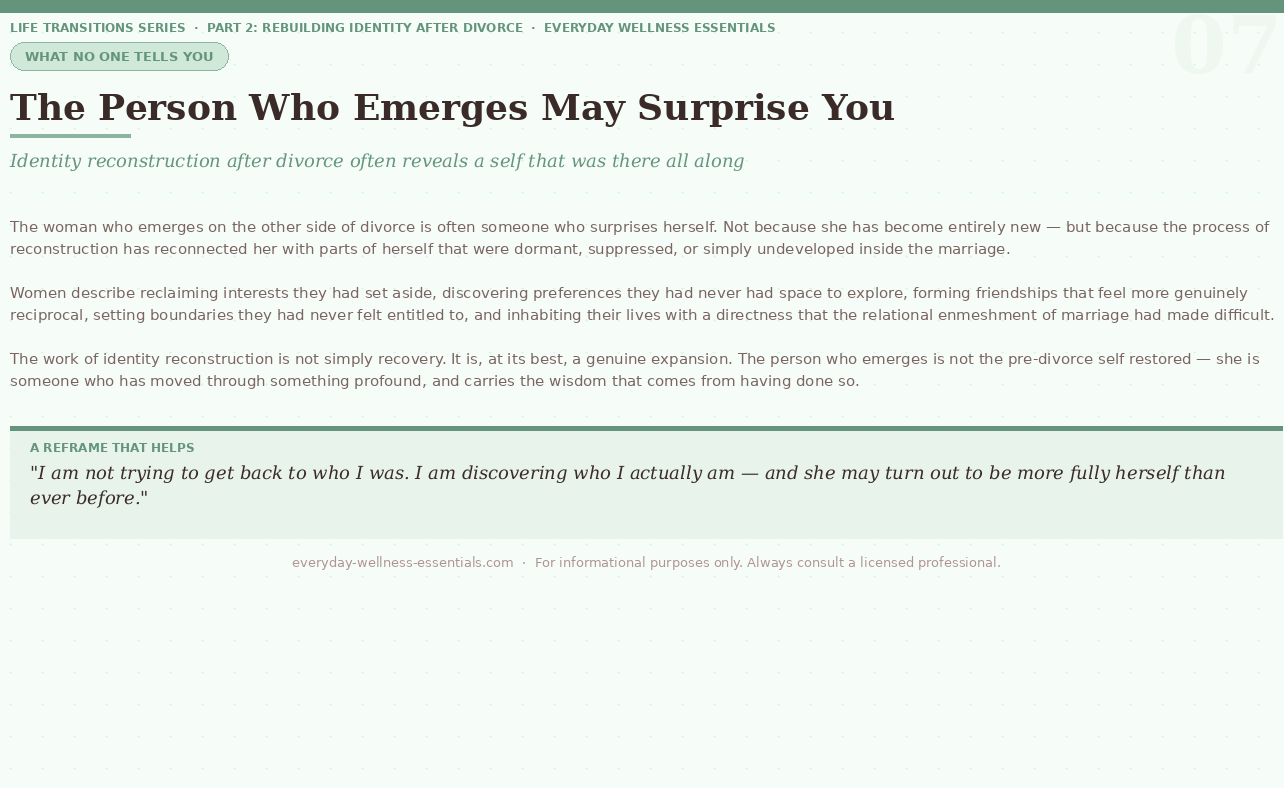
Seven Things Nobody Tells You About Identity After Divorce
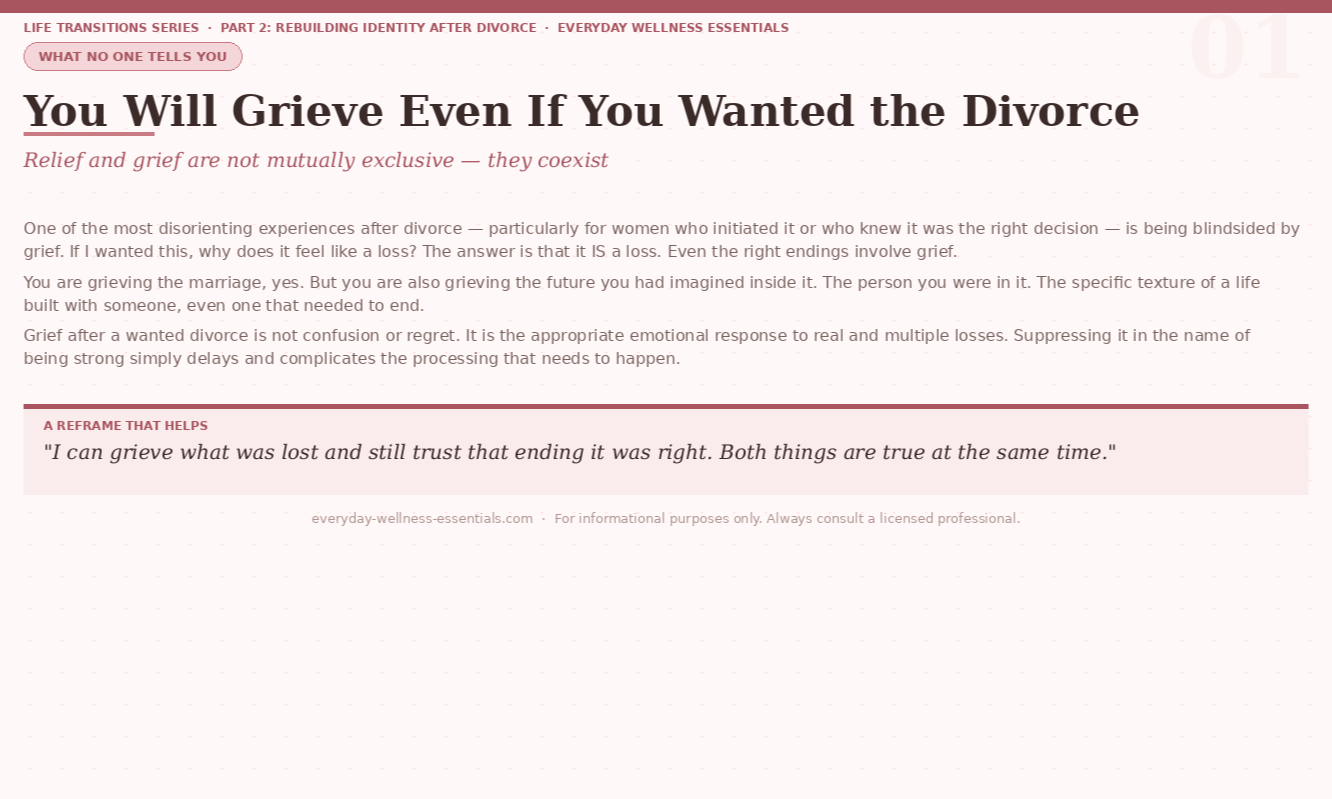
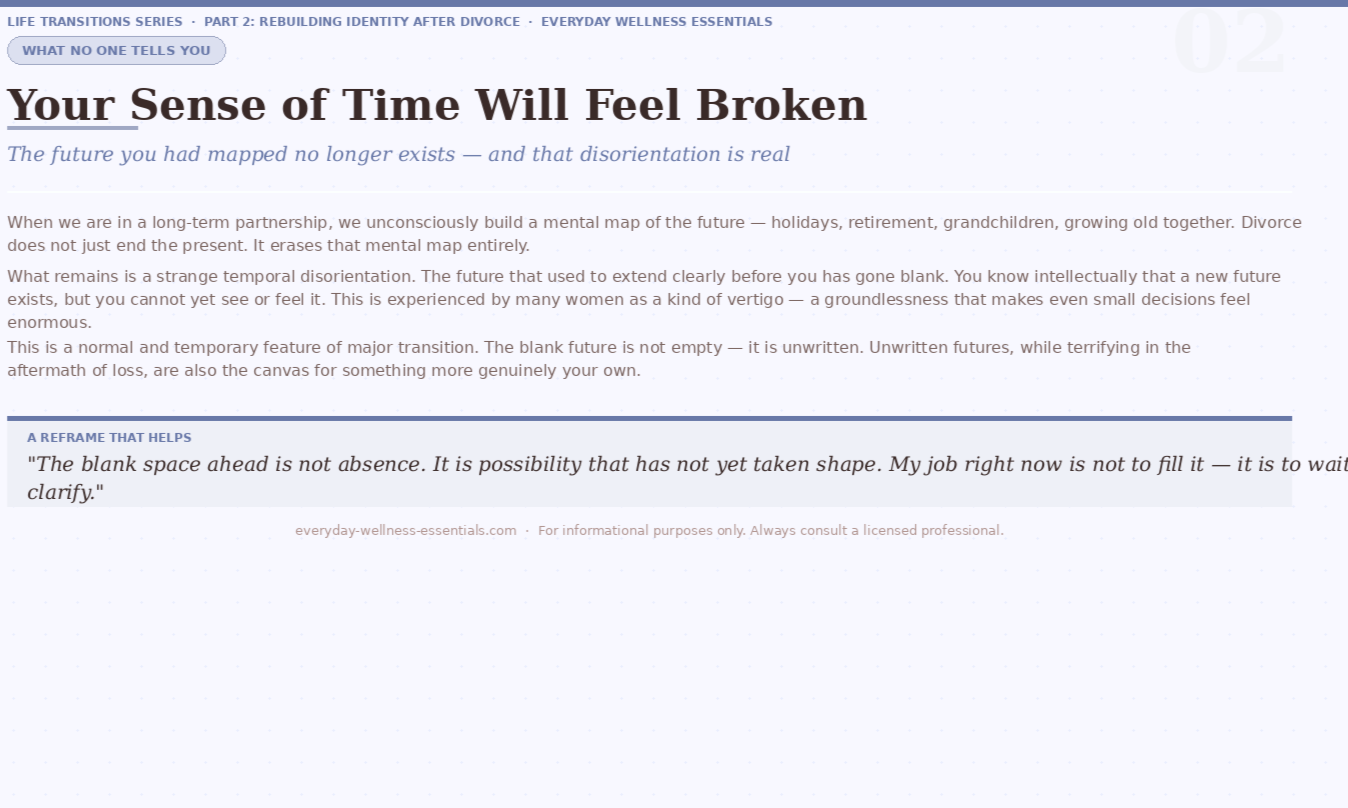
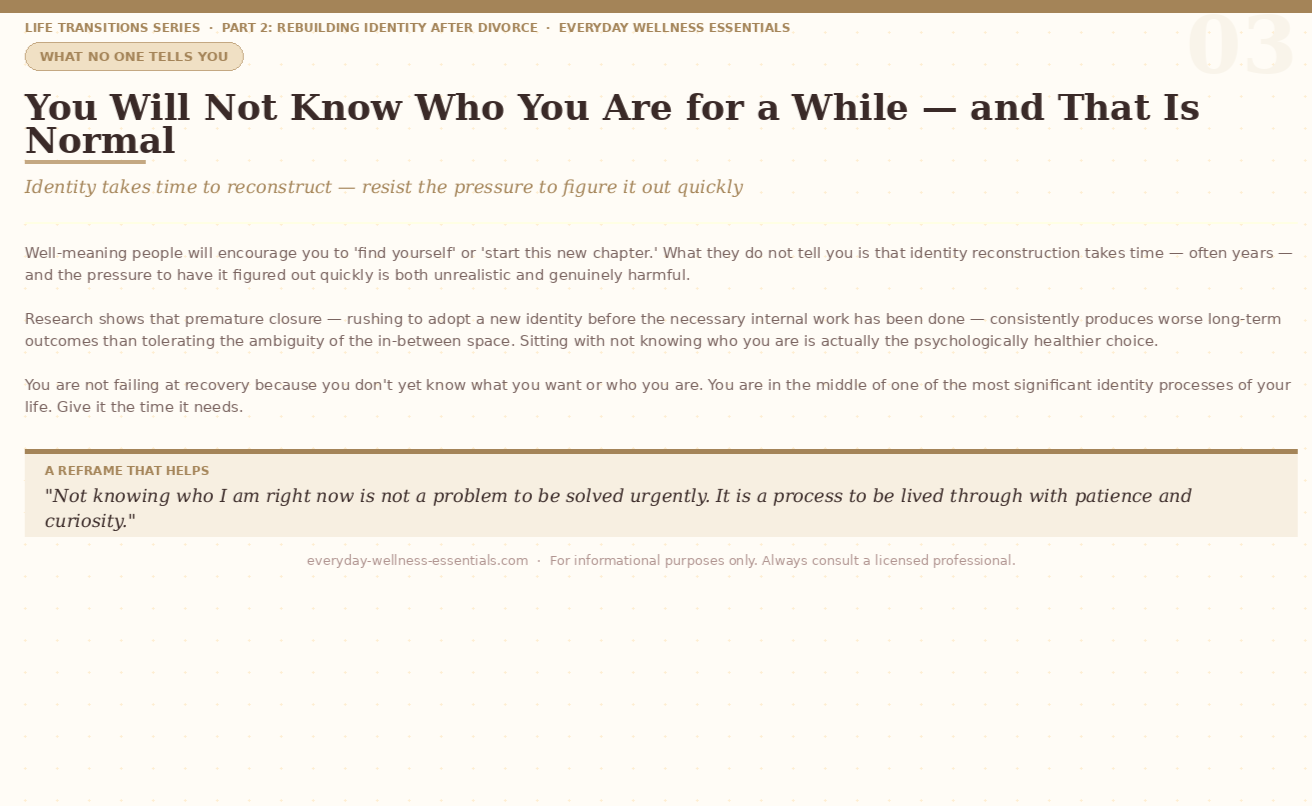
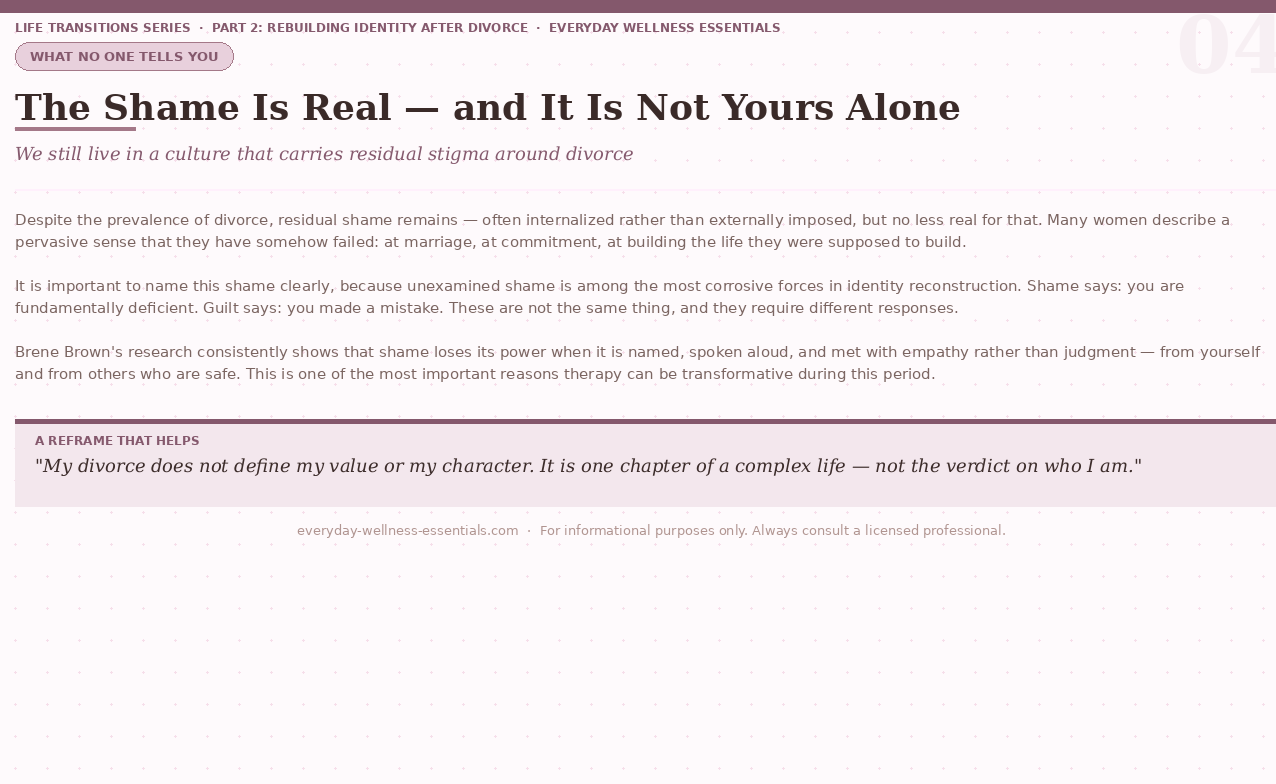
These are the experiences that come up again and again in my clinical practice — the ones women are often too ashamed or too confused to name, and that their support networks are often too uncomfortable to acknowledge. I want to name them clearly, validate them fully, and offer you a way of understanding each one.
A Practical Framework for Rebuilding Your Identity
Understanding what is happening is important. But so is having a concrete path forward. Here is the eight-step framework I use in clinical work with women rebuilding their identity after divorce:
1. Grieve Before You Rebuild
You cannot skip the ending. Before you can construct a new identity, you need to genuinely release the old one — through grief work, narrative processing, ritual, and therapeutic support. Premature reconstruction built on unprocessed grief will not hold. Give the grief its space first.
2. Conduct a Values Audit
Inside a long marriage, values often become fused with your partner’s. Now is the time to separate yours out. Ask: what do I actually care about? What do I value in a day, in a friendship, in how I spend my time and energy? Write it out. Be specific. This is the foundation your new identity will be built on.
3. Reclaim Your Preferences
In relationships, we often cede our preferences — about food, music, how to spend weekends, what to watch, where to go on vacation — in the interest of compromise. Post-divorce, you get to discover what you actually prefer when no one else’s preferences are in the equation. This sounds trivial and is often profoundly illuminating.
4. Reconnect With Pre-Marriage Self
Who were you before the marriage? What did you love? What did you dream about? What parts of yourself did you set aside or compress to make the relationship work? These are not dead parts — they are dormant ones. Revisiting them is not regression. It is a reunion with a self that has been waiting.
5. Experiment With New Experiences
Identity is not just discovered intellectually — it is built through action and experience. Try things you have never tried. Go places alone. Say yes to invitations that feel uncomfortable. Take a class in something you know nothing about. Every new experience gives you new information about who you are and what you want your life to hold.
6. Rebuild Your Social World Intentionally
Rather than mourning the friendships that didn’t survive the transition, invest deliberately in new connections. Seek people who are also navigating major change. Join groups organized around interests rather than couple-friendships. Look for depth and reciprocity rather than familiarity and history. The social world you build now can be more genuinely yours than the one that came with the marriage.
7. Work With a Therapist
Identity reconstruction after divorce is genuinely some of the most important psychological work a person can do — and it is work that benefits enormously from professional support. A skilled therapist provides a space to process grief, challenge shame, explore identity, and develop the narrative coherence that research identifies as the strongest predictor of long-term post-divorce wellbeing.
8. Write Your New Story
Narrative therapy research consistently shows that the story we tell about our experiences shapes how we integrate and move forward from them. Begin consciously authoring the narrative of your divorce — not a story of victimhood or of triumph, but of a woman who lived through something real and is discovering, with honest effort, what comes next. This is your story. You get to write it.
Books & Resources That Support This Journey
These are the resources I most frequently recommend to clients navigating identity reconstruction after divorce. All product links are affiliate links — I only share what I genuinely believe in.
📚 ESSENTIAL READING
Rebuilding: When Your Relationship Ends — Bruce Fisher & Robert Alberti
The most widely used and clinically respected guide to rebuilding after divorce. Now in its fourth edition, it walks through the emotional process in a structured, compassionate way that has helped millions of people find their footing after separation. I recommend this to virtually every client navigating post-divorce identity work.
Rising Strong — Brené Brown
Brown’s exploration of how we rise after falling — how we face shame, process failure, and write new stories about our experiences — is deeply applicable to the post-divorce identity journey. Her research on vulnerability and shame resilience provides a practical and emotionally honest framework for reconstruction.
📓 JOURNALING & IDENTITY WORK
The Artist’s Way — Julia Cameron
One of the most powerful tools I know for identity reconstruction after any major life transition. Morning Pages — three pages of longhand stream-of-consciousness writing each morning — consistently helps women reconnect with suppressed parts of themselves, clarify their values, and hear their own voice again after years of having it merged with someone else’s.
Start Where You Are — Meera Lee Patel
A beautifully designed guided journal for self-discovery and identity exploration. The prompts are thoughtful, accessible, and particularly suited to the kind of open-ended questioning that identity reconstruction after divorce requires. One of the most frequently recommended journals in my practice.
🧘 MIND-BODY SUPPORT
Trauma-Sensitive Yoga DVD & Practice Cards
For women whose divorces involved any element of emotional, psychological, or physical harm, trauma-sensitive yoga provides a body-based path to reclaiming a sense of safety and sovereignty in the body. Evidence-based and deeply accessible, this resource supports the somatic dimension of identity reconstruction that cognitive approaches alone cannot reach.
Red Light Therapy Panel
Designed for convenient at-home sessions as part of a daily wellness routine. Many people incorporate red light sessions into routines focused on relaxation and healing of the mind and body. Red light therapy (RLT) helps manage grief and depression by stimulating mitochondrial energy production in brain cells, which enhances serotonin and dopamine production. It reduces neuroinflammation, improves sleep by regulating melatonin, and increases cellular energy to improve mood and resilience. This non-invasive approach aids in relieving emotional overwhelm and promoting a calmer mental state.
A Final Word on Time
I want to close this post by addressing something I hear often from women who are months or even years past their divorce: I thought I would feel better by now. The implicit question beneath this is almost always the same: Am I doing this wrong?
You are not doing it wrong. Identity reconstruction after divorce is not a linear process with a predictable timeline. It does not follow the schedule that other people — or your own impatient inner critic — have in mind for you. It moves at its own pace, dictated by the depth of what was lost, the complexity of the marriage, the extent of the identity enmeshment, and the particular ways you engage or avoid the internal work.
What I can tell you, from years of watching women navigate this, is that the work is worth doing. Not because the process is easy, but because what lies on the other side of it — a self that is more genuinely your own, a life that reflects more of who you actually are — is something that could not have been reached any other way.
You are not broken. You are rebuilding. And the woman you are becoming deserves every ounce of the care and patience you would offer anyone you love.
With care and deep respect,
-Michelle

Michelle M. Dutcher, MA, LPC, PLLC
LICENSED PSYCHOT
HERAPIST · PRIVATE PRACTICE · 20+ YEARS EXPERIENCE
I help women navigate stress, anxiety, hormonal transitions, and life's biggest changes — with evidence-based tools and zero judgment. This blog is where clinical expertise meets real life.
The content provided on Everyday Wellness Essentials is for educational and informational purposes only and is not intended as medical, psychological, or professional advice. While I am a licensed mental health professional, the information shared on this website is not a substitute for individualized clinical care, diagnosis, or treatment. If you are experiencing significant emotional distress, mental health concerns, or a medical condition, you are encouraged to seek support from a qualified healthcare provider in your area.
Some of the links on this website may be affiliate links. This means that I may earn a small commission — at no additional cost to you — if you choose to make a purchase through these links. I only recommend products or resources that I genuinely believe may be helpful, but you are encouraged to do your own research before making any purchasing decisions.
Life Transitions Series
Part 1: Navigating Life’s Biggest Transitions — A Complete Framework
Part 2: Rebuilding Your Identity After Divorce YOU ARE HERE
Part 3: The Empty Nest — When the Role That Organized Your Life Walks Out the Door Coming Soon
Part 4: Grieving a Life You Thought You’d Have Coming Soon
Part 5: Midlife Reinvention — Starting Over When You’re Not Sure Who You’re Becoming Coming Soon
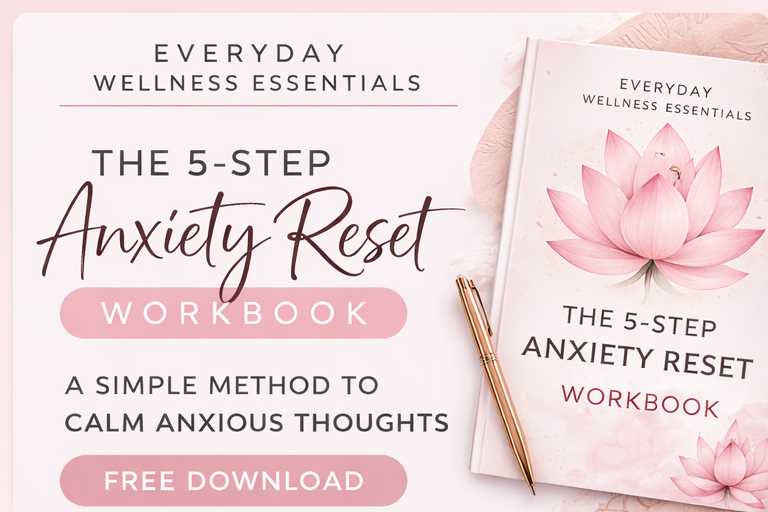
Feeling Overwhelmed
Right Now?
Download the free 5-Step Anxiety Reset Workbook — a practical, evidence-based guide to calming your nervous system in the moments when everything feels like too much. Made for exactly this kind of season.